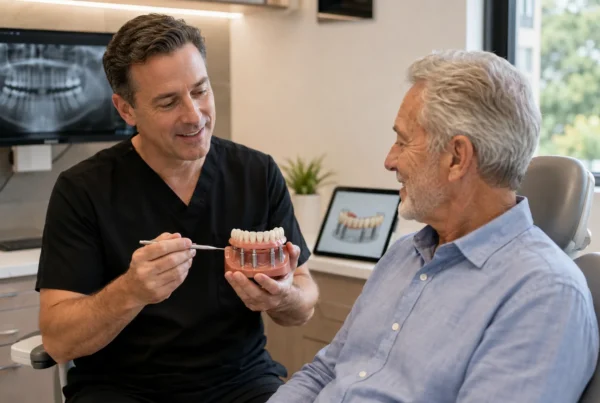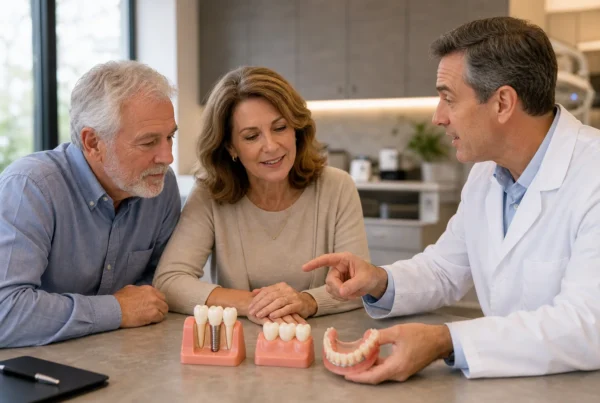


Losing a tooth leaves most people with more questions than answers about where to start. Dr. Andrew Randall at Randall Dentistry helps Park Cities patients choose between dental implants, bridges, and dentures. He trained at Texas A&M Baylor College of Dentistry and is a Texas Dental Association member. He has been helping University Park and Highland Park patients replace missing teeth since 2009.
The right option is not the same for every patient. It depends on teeth missing, surrounding bone health, your budget, and your long-term goals. A thorough evaluation through restorative dentistry at Randall Dentistry gives you a clear recommendation before any commitment.
Why the Right Choice Depends on Your Situation
No single tooth replacement option is best for everyone. Dental implants, bridges, and dentures each solve the same problem in fundamentally different ways. The differences show up in how they feel, how long they last, and how they affect surrounding bone. The goal is never to push one option over another.
A patient missing one tooth with healthy adjacent teeth faces different choices than one dealing with bone loss. Understanding what each option requires from your mouth is the foundation of a good decision. The goal is to find the option that serves your health, your habits, and your long-term goals. That answer looks different for every patient who walks through the door at Randall Dentistry. Dr. Randall builds his recommendations on a complete clinical picture, not assumptions.
How Dental Implants Work and Who They Are Best For
A dental implant replaces the root of a missing tooth with a titanium post placed into the jawbone. That post fuses with the bone over months and acts as a stable anchor for a dental crown. The result looks, feels, and functions like a natural tooth. No adjacent teeth are involved in the process.
Implants are the only tooth replacement option that preserves the jawbone at the missing tooth site. Every other option allows the bone to slowly shrink after the tooth is gone. That bone loss changes the shape of the face over time and affects how surrounding teeth fit together. Implants stop that process entirely. They are also the longest-lasting option, with well-maintained implants lasting 20 years or more. You can read more about how long dental implants last and what dental implants cost at Randall Dentistry.
Signs Dental Implants Are the Right Choice for You
Implants are not right for every patient, but for those who qualify, they are the gold standard. These are the signs that typically point toward implants as the best long-term option for Park Cities patients. Dr. Randall reviews implant candidacy thoroughly at Randall Dentistry before any treatment is planned.
- You are missing one or more teeth and want a result that feels and functions like a natural tooth
- You have sufficient bone density at the missing tooth site or are willing to pursue bone grafting
- Your surrounding teeth are healthy and you do not want them filed down for a bridge
- You are willing to go through a multi-month process for a permanent, lasting result
- You do not smoke or are committed to stopping during the healing period
- You want the option that best preserves your jawbone and facial structure long-term
Implants require an upfront investment of time and cost that bridges and dentures do not. For good candidates, that investment pays off in a result that lasts decades with no special maintenance required. Dr. Randall reviews implant candidacy at Randall Dentistry so Park Cities patients know exactly where they stand.
How Dental Bridges Work and Who They Are Best For
A dental bridge replaces missing teeth by anchoring an artificial tooth to the natural teeth on either side. Those anchor teeth, called abutments, are filed down and fitted with crowns that hold the bridge in place. The result looks natural and is fixed in the mouth, meaning it does not come out for cleaning. A bridge is a reasonable long-term choice for patients in their later years who want a faster result.
The procedure takes two to three weeks from start to finish. Dr. Randall prepares the abutment teeth and places a temporary bridge while the lab crafts the final restoration. Bridges work well for patients who are not implant candidates due to bone loss or health conditions. They are also a good fit for patients who want a faster solution with a lower upfront cost. The tradeoff is that adjacent teeth must be permanently altered to support the bridge, even if healthy. Bridges also do not prevent bone loss at the missing tooth site. Over time, the bone beneath the bridge continues to shrink, which affects fit and appearance of the restoration.
Implants vs. Bridges vs. Dentures: Side by Side
Patients at Randall Dentistry say that seeing the options compared directly makes the decision much easier to approach. The table below breaks down key differences across factors that matter most to Park Cities patients. No single column wins across every category.
| Factor | Dental Implants | Fixed Bridge | Removable Dentures |
| Feel and function | Most natural | Good | Requires adjustment |
| Bone preservation | Yes | No | No |
| Adjacent teeth affected | No | Yes, filed down | No |
| Lifespan | 20+ years | 10-15 years | 5-10 years |
| Maintenance | Standard oral hygiene | Standard oral hygiene | Daily removal and cleaning |
| Upfront cost | Highest | Moderate | Lowest |
| Process length | 3-6 months | 2-3 weeks | 2-4 weeks |
| Best for | Single or multiple teeth | 1-3 missing teeth | Multiple or full arch |
The right choice depends on your bone health, budget, how many teeth are missing, and your long-term goals. Dr. Randall walks through this table with every patient and explains which column fits their situation and why. This table does not replace a clinical evaluation, but it gives you a strong foundation for the conversation.

How Dentures Work and Who They Are Best For
Dentures replace multiple or all missing teeth with a removable prosthetic that rests on the gum tissue. Partial dentures replace several missing teeth while full dentures replace an entire arch. They are the most affordable tooth replacement option and can be completed in a matter of weeks.
Dentures require daily removal for cleaning and may need adhesive to stay secure over time. The adjustment period for full dentures typically takes several weeks. Most patients find that speaking and chewing become more natural as the muscles adapt. Over-the-counter adhesives can help with stability in the early weeks after fitting. Dr. Randall monitors the fit at Randall Dentistry and makes adjustments as needed during that period. As the jawbone shrinks after tooth loss, the fit of dentures changes and replacements become necessary over time. Patients wanting more stability later can move to implant-supported dentures or All-on-4 implants over time.
Questions to Ask Before Choosing a Tooth Replacement Option
Most patients benefit from thinking through a few key questions before their consultation at Randall Dentistry. Having clear answers helps Dr. Randall build a recommendation that fits your priorities, not only your clinical profile. These questions help clarify which option aligns with your priorities so the consultation starts well.
- How many teeth am I replacing and where are they located?
- How important is long-term bone preservation to me?
- Am I willing to go through a longer treatment process for a more permanent result?
- Do I want a fixed restoration or am I comfortable with something removable?
- What is my budget and am I open to financing options?
- Are my adjacent teeth healthy or have they already been compromised?
These questions do not have right or wrong answers. Park Cities patients who come in with clear priorities consistently say the consultation feels more productive. They help clarify which option fits your priorities so the conversation at Randall Dentistry starts from shared understanding.
How Dr. Randall Helps You Choose the Right Option
The recommendation Dr. Randall makes is based on a complete clinical evaluation, not a preset preference. He takes digital X-rays and a 3D scan to assess bone volume, tooth health, and medical history. He walks you through what each option would look like in your mouth before anything is scheduled. That includes the process, the timeline, the expected outcome, and the cost.
Nothing is booked until you fully understand what is involved and why the recommendation is structured that way. Park Cities and University Park patients say that clarity is what makes the Randall Dentistry consultation stand out. Every visit ends with a patient who knows exactly where they stand and what comes next.
The Right Answer Starts With the Right Evaluation. Call Randall Dentistry.
You came here to figure out which tooth replacement is right for you. Dr. Andrew Randall trained at Texas A&M Baylor College of Dentistry and is a Texas Dental Association member. He gives you a straight comparison based on your bone health, budget, and goals before anything is scheduled. That conversation happens at Randall Dentistry, and it starts with a proper clinical evaluation.
Patients in University Park, Highland Park, and Preston Hollow trust Dr. Randall to present every option without pressure. His goal at Randall Dentistry is to make sure you leave knowing which choice fits your life. Contact Randall Dentistry to schedule your tooth replacement consultation for a clear recommendation.
Frequently Asked Questions
Is a dental implant always better than a bridge or dentures?
Not always. Implants are the gold standard for single tooth replacement but require sufficient bone density and a multi-month process. For patients with bone loss or budget constraints, a bridge or denture may be more appropriate. The American Dental Association recommends a thorough evaluation before choosing between tooth replacement options. Dr. Randall reviews all three options at Randall Dentistry and recommends based on your specific clinical situation.
Can you get a dental implant after having a bridge or dentures?
In many cases yes, though it depends on how much bone loss has occurred. Bone grafting can restore the volume needed for an implant post when natural bone has shrunk. Many patients who previously had bridges or dentures can still receive implants with proper preparation. The American Academy of Implant Dentistry confirms this and Dr. Randall evaluates bone volume with a 3D scan at Randall Dentistry to determine whether implants remain viable.
How long does each tooth replacement option last?
Dental implants last 20 years or more and in many cases for life. Fixed bridges last 10 to 15 years and dentures need replacement every 5 to 10 years. The Mayo Clinic notes that implant longevity is closely tied to oral hygiene and overall health. Dr. Randall discusses realistic lifespan expectations for each option at your Randall Dentistry consultation.
What is the most affordable tooth replacement option?
Dentures have the lowest upfront cost, followed by bridges, with implants requiring the highest initial investment. Over a 20-year window the cost shifts because dentures and bridges require maintenance and replacement that adds up. The American Academy of Implant Dentistry notes that implants are often the most cost-effective option over a lifetime. Dr. Randall walks through the long-term cost comparison at Randall Dentistry before any decision is made.