

Most people who ask about dental implants have the same first question: am I even a candidate? Dr. Most people who ask about dental implants have the same first question: am I even a candidate? Dr. Andrew Randall at Randall Dentistry helps Park Cities patients find out if implants are right for them. He trained at Texas A&M Baylor College of Dentistry and is a Texas Dental Association member. He has been placing and restoring implants for University Park and Highland Park patients since 2009.
The answer is not the same for everyone. Some patients are ready to begin right away. Others need preparatory work before an implant can be placed. A thorough evaluation through restorative dentistry at Randall Dentistry shows you where you stand before any commitment.
What Makes Someone a Good Implant Candidate
Dental implants replace missing teeth by placing a titanium post into the jawbone. That post fuses with the bone over time and acts as a stable anchor for a crown. For that to work, the jawbone needs enough density and volume to hold the post securely during healing. The titanium post is made from a biocompatible material that the body does not reject.
Over time the bone cells grow around and attach to the post in a process called osseointegration. This is what gives an implant its stability and makes it feel like a natural tooth root. No other tooth replacement option replicates that biological connection between the restoration and the bone. That connection is also why implants prevent bone loss at the missing tooth site. Implants protect the jawbone in a way that bridges and dentures cannot.
Good implant candidates are in stable oral health with adequate bone density and no active gum disease. Overall health matters too. Patients without uncontrolled systemic conditions that affect healing tend to get the best outcomes. Age is rarely a limiting factor. Most adults from their 20s through their 80s are evaluated on the same criteria.
Factors That Affect Implant Candidacy
Several specific factors determine whether you are ready now or whether preparation is needed first. None of them are automatic disqualifiers. They are the data points Dr. Randall uses to build a plan with the best chance of lasting.
Bone density is the most important structural factor. If you lost a tooth some time ago, the bone in that area may have started to shrink. That process is called bone resorption and it is common. Gum disease affects the tissue and bone around the implant site and needs treatment before placement begins. Smoking significantly slows healing and is one of the most consistent risk factors for implant failure. Certain medications and conditions, including uncontrolled diabetes and bisphosphonates for osteoporosis, also affect healing.
Signs You Are Likely a Good Candidate
Not every patient needs a full workup before getting a sense of where they stand. These are the signs that typically mean a patient is ready for implant placement at Randall Dentistry. Dr. Randall confirms candidacy through a clinical exam and 3D imaging before any treatment is planned.
- You have one or more missing teeth with healthy surrounding gum tissue
- Your jawbone has not significantly shrunk at the missing tooth site
- Your gums are healthy with no signs of active periodontal disease
- You do not smoke or are willing to stop during the healing period
- Your overall health is stable with no uncontrolled systemic conditions
- You have maintained consistent dental hygiene habits
Meeting most of these criteria puts you in a strong position for implant placement. Dr. Randall reviews each factor at your consultation and explains how it affects your timing and treatment. Park Cities patients who come in prepared tend to leave with a clear plan in hand.
When You Are Not Yet a Candidate
Being told you are not yet a candidate does not mean implants are off the table. It usually means some preparatory work is needed before placement can proceed. The most common reasons include insufficient bone volume, active gum disease, or an unstabilized health condition.
Bone grafting is the most common preparatory procedure. It rebuilds the volume needed to support the implant post. Depending on the extent of grafting required, healing takes four to six months before implant placement can begin. Gum disease treatment through periodontal therapy is another common preparatory step. The infection needs to be fully resolved before any implant is placed in the surrounding tissue.
Implants vs. Other Tooth Replacement Options
Many patients come to Randall Dentistry weighing implants against bridges or dentures. The right choice depends on how many teeth are missing, bone health, and your long-term goals. The table below gives you a clear side-by-side view before your consultation.
| Factor | Dental Implants | Fixed Bridge | Removable Dentures |
| Feel and function | Most natural | Good | Takes adjustment |
| Bone preservation | Yes | No | No |
| Adjacent teeth affected | No | Yes, filed down | No |
| Lifespan | 20 years or more | 10-15 years | 5-10 years |
| Maintenance | Standard oral hygiene | Standard oral hygiene | Daily removal and cleaning |
| Best for | Single or multiple teeth | 1-3 missing teeth | Multiple or full arch |
Each option has a place depending on the patient’s situation. Dr. Randall walks you through how much dental implants cost and how long they last at your consultation before any decision is made. Patients who understand all three options tend to feel more confident in whatever direction they choose.
How Dr. Randall Evaluates Implant Candidacy
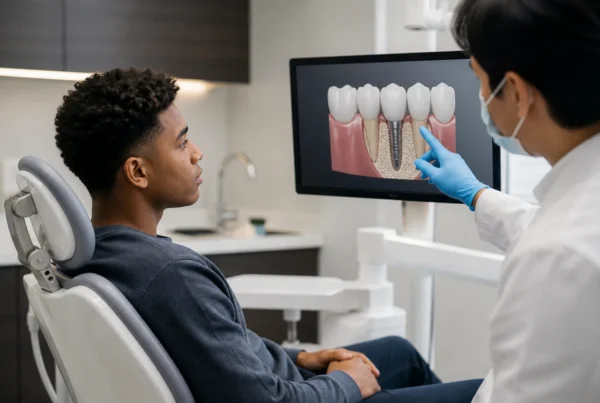
The candidacy evaluation at Randall Dentistry is more thorough than a standard dental exam. Dr. Randall takes digital X-rays and a 3D cone beam scan to assess bone volume and nerve locations. That imaging gives him a precise picture of what is possible and what needs to happen first.
He also reviews your full medical history, current medications, and any health conditions that affect healing. This step matters because implant success depends as much on systemic health as it does on oral health. After the evaluation, Dr. Randall presents his findings and walks you through every option before anything is scheduled. Nothing is booked until you fully understand what the plan involves and why it is structured that way.
Steps to Take If You Are Not Yet a Candidate
Hearing that you need preparatory work before an implant can feel discouraging. The reality is that most patients who need preparation still end up with successful implants. These are the steps Dr. Randall outlines at Randall Dentistry when preparation is needed before implant placement.
- Schedule a bone grafting consultation if bone volume is insufficient at the implant site
- Complete any needed gum disease treatment before placement is considered
- Stabilize any systemic health conditions in coordination with your physician
- Quit smoking or commit to stopping during the treatment and healing period
- Address any remaining decay or infection in surrounding teeth before moving forward
- Return for a follow-up evaluation after preparatory work is complete
None of these steps are permanent setbacks. Each one moves you closer to a successful implant outcome. Dr. Randall coordinates every phase at Randall Dentistry so Park Cities patients always have a clear plan.
What the Implant Process Looks Like After Approval
Once Dr. Randall confirms you are a candidate, the process moves in a clear sequence. The first appointment involves placing the titanium post into the jawbone under local anesthesia. Most patients are surprised by how manageable the implant placement appointment feels. Dr. Randall uses local anesthesia and takes time to answer every question before the procedure begins. Sedation options are also available at Randall Dentistry for patients who prefer a more relaxed experience.
The temporary restoration placed after the post is in looks and functions like a normal tooth. Osseointegration, the process where the post fuses with the bone, takes three to four months on average. Dr. Randall monitors healing at checkpoints during this period. Once the post is fully integrated, a dental crown is custom-made and attached to the post. The crown is matched to your surrounding teeth in shape, size, and color so the result looks natural. Patients leave that first appointment with their smile intact and a clear timeline for what comes next.
Find Out If You Qualify. Schedule at Randall Dentistry.
You came here because you are missing a tooth and wondering whether an implant is possible for you. That question deserves a real answer based on your bone health, oral health, and medical history. Dr. Andrew Randall trained at Texas A&M Baylor College of Dentistry and is a Texas Dental Association member. He gives you a straight picture of where you stand before anything is planned. University Park and Highland Park patients consistently say the consultation alone was worth the trip. It removes the uncertainty and replaces it with a clear path forward.
Patients in University Park, Highland Park, and Preston Hollow trust Dr. Randall because he treats the consultation as a conversation, not a sales pitch. He is a Texas Dental Association member with over 15 years of implant experience at Randall Dentistry. His focus is on giving you the full picture so you can make the right decision for your mouth, your budget, and your life. When you are ready to find out where you stand, contact Randall Dentistry to schedule your implant candidacy evaluation.
Frequently Asked Questions
What disqualifies someone from getting a dental implant?
No single factor automatically disqualifies a patient, but several require attention before placement can proceed. Insufficient bone volume, active gum disease, uncontrolled diabetes, and smoking are the most common reasons a patient needs preparatory work first. The American Dental Association notes that a thorough evaluation of bone health and overall health is necessary before any implant placement. Dr. Randall reviews all of these factors at your candidacy evaluation at Randall Dentistry and tells you exactly what needs to happen before you are ready.
Can you get a dental implant if you have bone loss?
In many cases yes. Bone grafting can rebuild the volume needed to support an implant post when natural bone has shrunk after tooth loss. The extent of grafting required depends on how much bone loss has occurred and where. The American Academy of Implant Dentistry confirms that bone grafting is a well-established preparatory procedure that expands implant candidacy for many patients. Dr. Randall assesses bone volume with a 3D cone beam scan at Randall Dentistry and tells you whether grafting is needed and what that timeline looks like.
How long does the dental implant process take from consultation to final crown?
Most single-tooth implant cases take three to six months from placement to final crown, not counting any preparatory work. The longest phase is osseointegration, where the titanium post fuses with the jawbone over three to four months. The Mayo Clinic notes that the full process including any bone grafting can take up to a year or more depending on the patient. Dr. Randall maps out every phase at your consultation at Randall Dentistry so you know the timeline before any treatment begins.
Are dental implants worth it compared to a bridge or dentures?
For most patients with sufficient bone health, implants offer the most natural feel, the longest lifespan, and the only tooth replacement option that preserves the jawbone. A bridge requires filing down adjacent healthy teeth and does not prevent bone loss at the missing tooth site. Dentures require daily removal and adjustment over time as the bone beneath them continues to change shape. The American Academy of Implant Dentistry recognizes implants as the standard of care for single tooth replacement in appropriate candidates. Dr. Randall walks you through all three options at Randall Dentistry so your decision is based on your specific situation.