

Dental emergencies can escalate quickly, and knowing what qualifies helps you act before pain or infection gets out of hand. At Randall Dentistry in University Park, Dr. Andrew Randall helps Park Cities patients identify true dental emergencies and get the right care at the right time. He trained at Texas A&M Baylor College of Dentistry and belongs to the Texas Dental Association. He built Randall Dentistry around one principle: patients should never feel unsure about what to do next.
Most dental emergencies share a common pattern. Pain that does not improve, swelling that appears overnight, or trauma to a tooth are all situations that need prompt evaluation through emergency dental care rather than a wait-and-see approach. Patients across Highland Park, University Park, and Preston Hollow who call Randall Dentistry early consistently see better outcomes than those who delay. The general dentistry team at Randall Dentistry can help you determine urgency over the phone if you are unsure.
When Dental Pain or Damage Becomes an Emergency
Not every toothache or dental problem qualifies as an emergency, but some situations escalate rapidly without treatment. Problems that begin as mild discomfort can become serious when swelling, infection, or nerve involvement develops alongside them.
Pain that does not improve with time is one of the clearest warning signs. Tooth pain that wakes you at night or spreads into the jaw, ear, or face often points to deeper issues that need same-day evaluation at Randall Dentistry.
Common Dental Emergencies That Need Same Day Care
SSome dental problems almost always require immediate attention because they worsen rapidly without treatment. These situations typically involve infection, trauma, or intense pain that cannot safely wait for a scheduled appointment.
- Severe toothache with swelling, pressure, or pain when biting
- A knocked-out or partially dislodged tooth
- A broken or cracked tooth causing sharp or constant pain
- A dental abscess with swelling, fever, or bad drainage
- Uncontrolled bleeding after an injury or dental procedure
Prompt care in these situations protects both your oral health and your overall wellbeing. Acting early reduces the likelihood of more complex or costly treatment later. Dr. Randall evaluates urgent dental cases at Randall Dentistry in University Park and helps patients from across the Park Cities understand exactly what is happening before any treatment begins.
Dental Problems That Can Sometimes Wait
Not every dental issue requires same-day treatment, even when it feels uncomfortable or concerning. Some problems are worth monitoring briefly before seeking care.
Mild tooth sensitivity without pain, a small chip without discomfort, or a loose filling that is not causing pain may not require immediate attention. These concerns still need professional evaluation, but they do not always rise to the level of a true dental emergency. If symptoms change or worsen, the urgency changes with them.
Signs That a Dental Issue Is Getting Worse
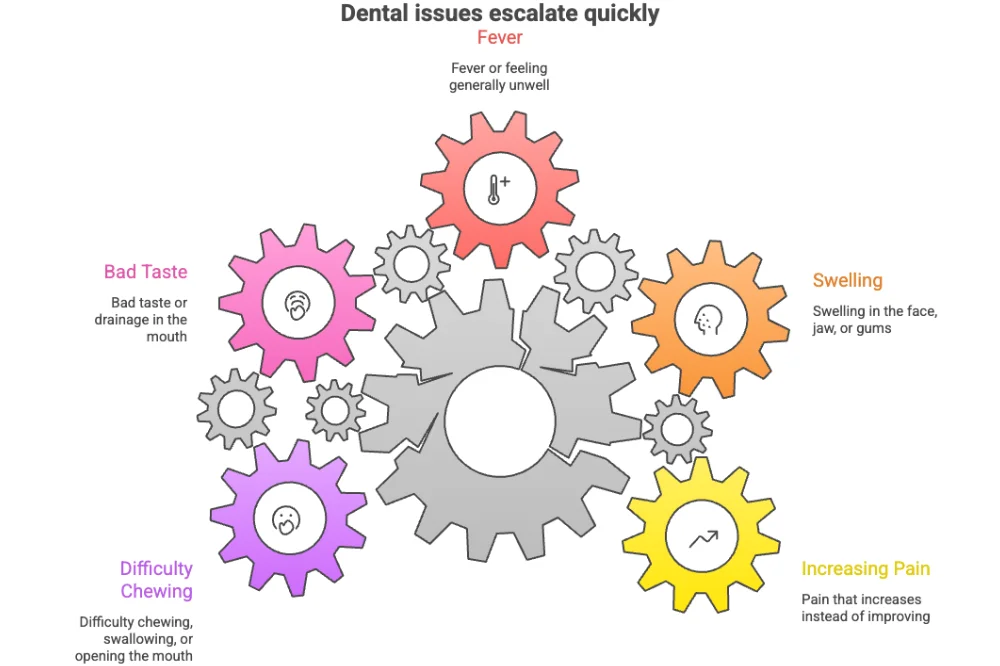
Dental problems can change quickly, even when they start small or feel manageable. Paying attention to warning signs helps you avoid complications and unnecessary pain.
- Pain that increases instead of improving over time
- Swelling in the face, jaw, or gums that was not there before
- Fever or feeling generally unwell alongside the dental pain
- Bad taste, discharge, or drainage coming from the area
- Difficulty chewing, swallowing, or opening your mouth fully
When these signs appear together, delaying care increases the risk of infection spreading or permanent damage developing. Early treatment at Randall Dentistry protects your oral health and your overall health at the same time. Dr. Randall sees urgent dental cases and gives you a clear picture of what is happening before recommending any treatment.
Emergency Dental Care vs. Waiting for a Regular Appointment
Knowing whether to seek emergency care or wait for a regular appointment can reduce stress during a denKnowing whether to seek emergency care or schedule a regular appointment reduces stress when a dental problem appears suddenly. Many patients worry about overreacting, which sometimes causes them to delay care that would have been straightforward if handled earlier.
| Feature | Emergency Dental Care | Regular Appointment |
|---|---|---|
| Pain Level | Severe or worsening | Mild or manageable |
| Swelling or Infection | Often present and spreading | Usually absent |
| Tooth Damage | Knocked-out or painful fracture | Minor chip without pain |
| Bleeding | Heavy or uncontrolled | Minimal or none |
| Timing | Same day or immediate | Can wait days to weeks |
| Health Risk if Delayed | Higher risk of complications | Lower short-term risk |
Both types of visits play an important role in long-term oral health. Dr. Randall helps patients choose the right timing based on symptoms, risk level, and comfort so care is neither delayed nor rushed unnecessarily. If you are on the fence, calling Randall Dentistry is always the right first step.
What to Do Before You See an Emergency Dentist
What you do before your appointment can influence both your comfort and the outcome of treatment. Simple steps taken early help protect the tooth and reduce pain while you wait.
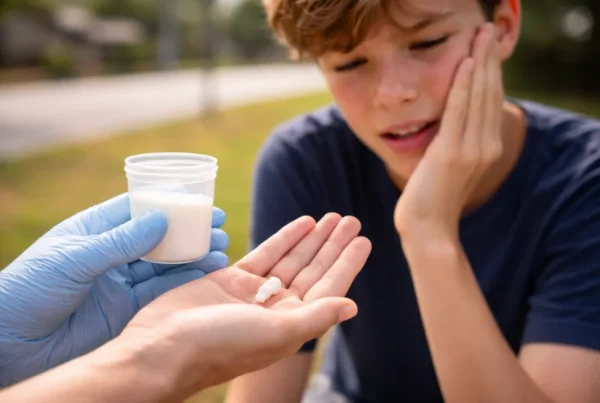
If a tooth is knocked out, handle it by the crown only, rinse it gently without scrubbing, and keep it moist by placing it in milk or holding it between your cheek and gum. For swelling or pain, apply a cold compress to the outside of your face. Avoid placing aspirin directly on the gum tissue, as this can cause chemical damage to the surrounding tissue. Get to Randall Dentistry as quickly as possible, and call ahead so the team can prepare for your arrival.
Why Acting Early on Dental Emergencies Makes a Difference
Dental emergencies often signal deeper problems beneath the surface, including infection, nerve damage, or structural weakness. Without care, these issues can spread or worsen faster than most patients expect.
Emergency treatment at Randall Dentistry focuses on relieving pain, controlling infection, and stabilizing the tooth. This approach protects your long-term oral health and reduces the need for more involved procedures later. A tooth that can be saved with a dental crown today can become a more complicated case if infection is allowed to advance. Patients across University Park, Highland Park, and Dallas who act quickly consistently recover faster and with less overall treatment.
Do Not Wait on a Dental Emergency. Call Randall Dentistry.
You came in looking for clarity on whether what you are experiencing is a real emergency. If pain, swelling, or trauma is involved, the answer is almost always yes. Dr. Andrew Randall trained at Texas A&M Baylor College of Dentistry and is a Texas Dental Association member who has helped University Park and Park Cities patients navigate dental emergencies since 2009.
Randall Dentistry is where you get straight answers, same-day care when it matters, and a clear plan for what comes next. Patients across University Park, Highland Park, and Preston Hollow trust Dr. Randall to move quickly without ever rushing past the details. Contact Randall Dentistry to schedule your appointment or call for same-day availability.
Randall Dentisty
214-750-4901
6031 Sherry Ln,
Dallas, TX 75225
Frequently Asked Questions
What qualifies as a dental emergency?
Severe pain, swelling, bleeding, infection, or tooth trauma almost always qualify as dental emergencies. These problems can worsen quickly and early evaluation helps reduce the risk of more serious complications. The American Dental Association notes that situations involving infection, trauma, or uncontrolled bleeding should be treated as soon as possible. Dr. Randall evaluates urgent dental situations at Randall Dentistry in University Park and helps you understand exactly what is happening before any treatment begins.
Is a toothache always a dental emergency?
Not every toothache is a dental emergency, but severe, worsening, or persistent pain usually is. Mild sensitivity without swelling or fever may be able to wait briefly, but pain that disrupts sleep or spreads to the jaw or face needs same-day evaluation. The American Dental Association recommends prompt evaluation when pain is accompanied by swelling, fever, or worsening symptoms. Dr. Randall helps Park Cities patients determine urgency quickly at Randall Dentistry so the right care happens at the right time.
What should I do if a tooth is knocked out?
Act immediately. Handle the tooth by the crown only, rinse it gently without scrubbing, and keep it moist in milk or between your cheek and gum. The Mayo Clinic notes that timing strongly affects whether a knocked-out tooth can be saved, and care should be sought within 30 minutes whenever possible. Dr. Randall sees knocked-out tooth cases at Randall Dentistry in University Park and will do everything possible to save the tooth when you arrive quickly.
Can a dental infection be dangerous?
Yes. Dental infections can spread beyond the mouth to the jaw, neck, or other areas of the body if left untreated. Swelling, fever, difficulty swallowing, or a bad taste in the mouth are warning signs that infection has progressed and needs immediate attention. Harvard Health notes that untreated dental infections can become serious medical situations when ignored. Dr. Randall treats dental infections at Randall Dentistry and addresses the source so the problem does not return.
Related Services