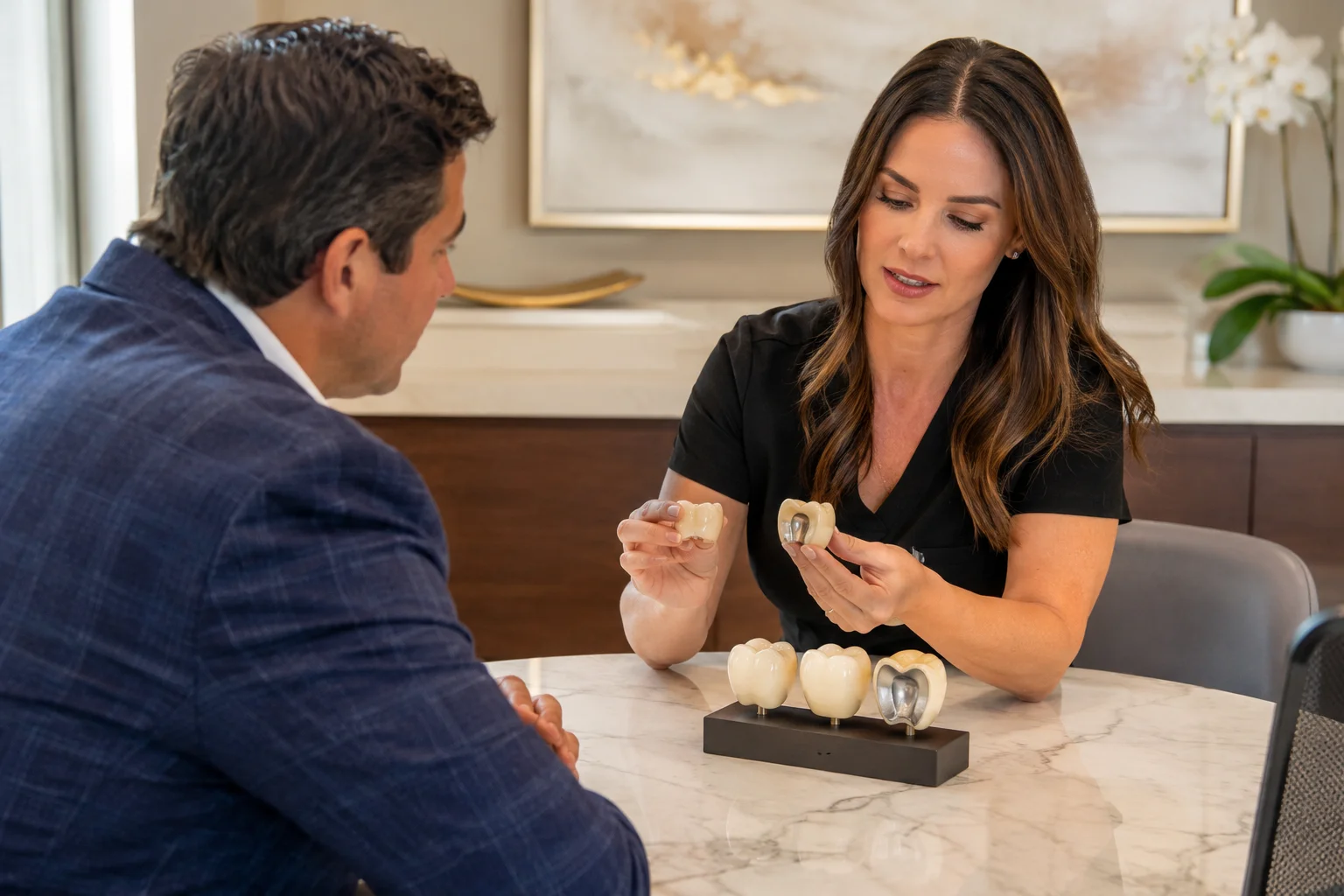
Crown Longevity in University Park TX: What Actually Determines It
Most patients getting a dental crown want to know one thing: how long will it last? Dr. Andrew Randall at Randall Dentistry helps Park Cities patients understand what to expect from their crown. He trained at Texas A&M Baylor College of Dentistry and holds Texas Dental License #19682. He has been placing and restoring crowns for University Park and Highland Park patients since 2009.
The honest answer is that crown lifespan depends on more than the material used. How you care for your crown, what it covers, and how it was placed all play a role. A thorough evaluation through restorative dentistry at Randall Dentistry gives you a clear picture of what to expect. Understanding the factors involved helps you protect your investment from day one.
How Long Dental Crowns Typically Last
Most dental crowns last between 10 and 15 years with normal use and proper care. Some crowns last 20 years or more when placed correctly and maintained well. The range is wide because crown longevity depends on several variables that differ from patient to patient.
Crowns placed after a root canal often last longer than those placed on a living tooth. That tooth is no longer vital, meaning it is less susceptible to decay from within. Crowns on back teeth typically wear faster than those on front teeth because of heavier chewing forces. Dr. Randall explains expected lifespan based on location and condition at every crown consultation at Randall Dentistry.
What Affects How Long a Crown Lasts
Several factors determine where your crown lands on the lifespan spectrum. The material, the quality of placement, and your daily habits all contribute. None of these factors work in isolation, but some carry more weight than others.
Teeth grinding puts significant stress on crowns and is one of the leading causes of premature crown failure. Patients who grind at night often wear through the surface of a crown faster than normal chewing would. Poor oral hygiene allows bacteria to attack the margin where the crown meets the natural tooth. That margin is the most vulnerable part of any crown and needs consistent cleaning to stay intact.
Habits That Shorten Crown Lifespan
Some habits put crowns at risk faster than patients realize, and most of them are easy to fix once you know about them. Grinding or clenching at night without a night guard puts repeated stress on the crown surface and is one of the leading causes of early failure. Chewing ice, hard candy, or popcorn kernels, using your teeth to open packaging, and biting nails all put sudden force on the crown that normal chewing never creates. Inconsistent brushing and flossing around the crown margin allows bacteria to attack the weakest point of the restoration over time.
Skipping regular cleanings means crown wear goes unmonitored until a small problem becomes a bigger one. Drinking large amounts of acidic beverages slowly weakens the cement bond that holds the crown in place. Dr. Randall discusses all of these patterns at your crown consultation at Randall Dentistry so you leave knowing exactly what to protect. A night guard from Randall Dentistry is one of the most effective steps for patients who grind.