

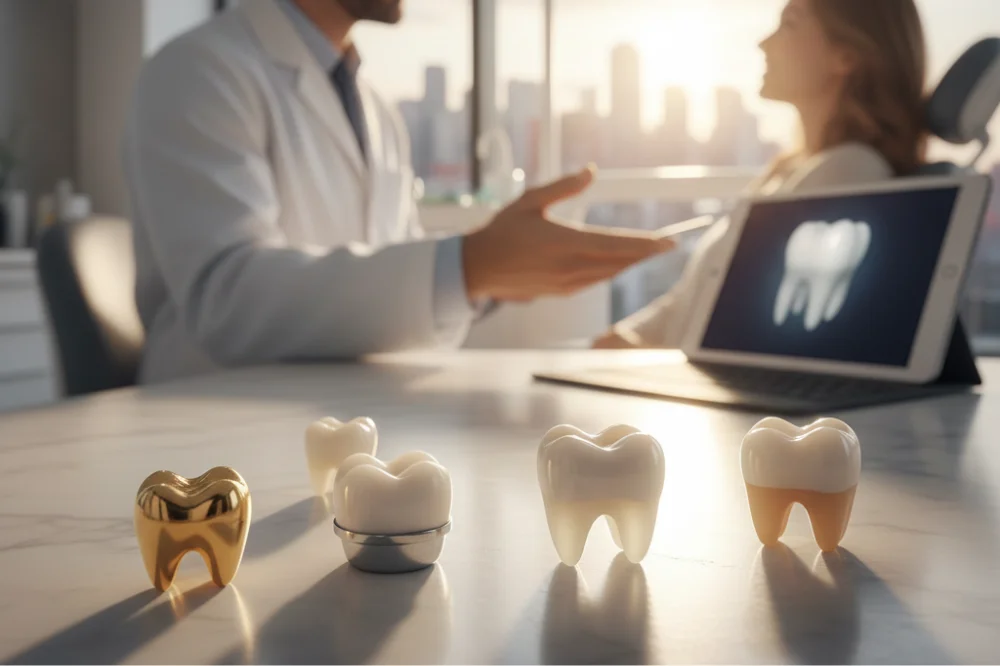
Getting a dental crown can sound intimidating, but it’s actually a simple and highly effective way to restore a damaged tooth. In this article, we’ll walk you through the entire crown process so you know what to expect before, during, and after your visits. You’ll also see how different crown materials compare, what the timeline looks like, and how to care for your new crown once it’s placed. Whether this is your first crown or your fifth, this guide will help everything feel a little more familiar.
Dr. Drew Randall at Randall Dentistry in Dallas, TX, has helped thousands of patients restore their smiles with high-quality crowns that fit, feel, and function like real teeth. He treats patients from Highland Park, Preston Hollow, University Park, and nearby neighborhoods. With decades of experience and an honest, easy-to-understand approach, Dr. Randall focuses on doing what’s right for you, never upselling or rushing the process.
Why You Might Need a Crown in the First Place
Crowns aren’t just for major dental emergencies. Sometimes a small crack or a worn-down filling is enough to put a tooth at risk. Many of Dr. Randall’s patients from Bluffview, Lakewood, and Park Cities come in with issues that can’t be solved with a simple filling, and a crown is the best long-term fix. It’s not just about stopping current damage, it’s about protecting the tooth from further problems down the line.
You might need a crown if:
- A filling isn’t enough to fix the tooth
- You’ve had a root canal
- A tooth is cracked or worn down
- You want to cover a discolored or uneven tooth
- You’re getting a dental implant
A dental crown protects the tooth structure, restores function, and improves appearance. It’s one of the most common and reliable treatments in modern dentistry. Once placed, most patients say they don’t even notice it’s there, it simply works and blends in.
What Happens at the First Appointment
The first visit sets the stage for your crown. Dr. Randall begins by checking the tooth and reviewing your digital scans. He’ll talk you through your options, including crown material types and why one might work better than another for your specific case. Whether you’re looking for durability, aesthetics, or affordability, he helps you make the right choice. Every step is explained clearly, so nothing feels rushed or uncertain.
Next, the tooth is prepped by gently shaping it to fit the crown. Dr. Randall numbs the area so you stay comfortable. Once the tooth is ready, he takes a digital impression and places a temporary crown to protect your tooth until the permanent one is ready. This temporary solution allows you to chew, speak, and smile normally while your final crown is being crafted.
This visit typically takes about an hour to ninety minutes. The temporary crown looks natural and functions well, but it’s not as strong as the final crown. You’ll need to avoid sticky or very hard foods until your permanent crown is in place. Most patients are pleasantly surprised at how smooth and painless this first step feels.
How Your Final Crown Gets Made
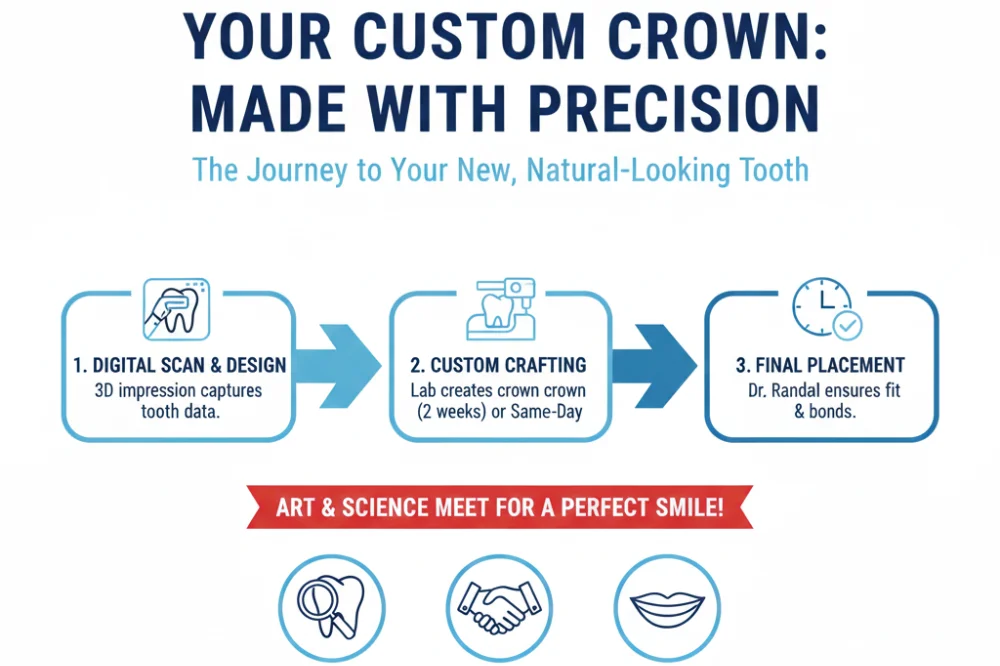
Your permanent crown is custom-made using your scan. Most are ready in about two weeks. Some patients in Uptown, Hillcrest Estates, and Lower Greenville ask about same-day crowns, and for certain zirconia cases, Dr. Randall can provide this service right in the office. These same-day solutions offer a great convenience, especially for patients with busy schedules.
Each crown is designed to match the color, shape, and bite of your natural tooth. It’s built for strength and made to last, whether it’s porcelain, zirconia, metal, or PFM. The dental lab uses digital precision to create a crown that feels like part of your natural smile. You’ll barely notice a difference in feel or function.
Once your crown is completed, it’s sent back to the office, ready to be placed. The attention to detail in this stage ensures a better fit and long-term comfort. This is where art and science meet to give you a crown that performs and looks great.
How Different Crown Materials Compare
Not sure which material to pick? That’s where this comparison helps. Here’s a quick breakdown of the pros and cons of each type of crown:
| Material | Best For | Looks Natural | Long-Lasting | Budget Friendly | Notes |
| Porcelain | Front teeth | Yes | Moderate | Moderate | Great for looks, but can chip under pressure |
| Zirconia | Front or back | Yes | High | Moderate | Strong and esthetic, good all-around |
| PFM (Porcelain + Metal) | Front/back | Yes | High | Moderate | Metal adds strength, but gumline may show |
| Metal (Gold/Alloy) | Molars | No | Very High | Low | Super durable, but not tooth-colored |
| Resin | Temporary use | Somewhat | Low | High | Quick fix, not for long-term use |
Dr. Randall helps you decide based on the location of the tooth, your bite, how visible the crown is, and how long you want it to last. He’ll ask about your habits, like grinding your teeth, and walk you through which material makes the most sense. It’s not just about choosing the “best” material, it’s about choosing the right one for you.
What Happens at the Second Visit
When your permanent crown is ready, you’ll return for a short follow-up. Dr. Randall removes the temporary crown, tests the fit of the new one, and makes sure it looks and feels right. Once confirmed, he bonds it in place using a strong dental cement. He then checks your bite and makes adjustments so the crown feels natural and doesn’t affect how you chew.
This visit usually takes under an hour, and you can go back to your routine right away. Most patients in Vickery Place, Turtle Creek, and Greenway Parks say it’s much easier than they expected. There may be a little sensitivity for a few days, but that quickly fades. After that, you’ll likely forget the crown is even there.
Caring for Your New Crown at Home
Once your crown is placed, caring for it is simple. Treat it just like a natural tooth with daily brushing and flossing. Regular checkups every six months help spot any early issues. Good care can make your crown last well over a decade.
Dr. Randall also suggests:
- Using a soft toothbrush and non-abrasive toothpaste
- Flossing gently to avoid tugging at the crown edge
- Avoiding hard foods like ice or popcorn kernels
- Wearing a nightguard if you clench or grind
With the right care, your crown can last 10 to 15 years or longer. Many patients say they forget which tooth had the crown because it blends in so well. That’s the goal, comfortable, long-term function that doesn’t get in the way of everyday life.
Taking the Next Step
Getting a crown doesn’t have to feel overwhelming. Dr. Drew Randall and his team take the time to explain your options, keep you comfortable, and make sure everything fits just right. You’ll walk out with a tooth that looks good, feels strong, and works like it should. That’s the kind of peace of mind every dental patient deserves.
If you’ve been told you need a crown, or you’re just not sure if one is right for you, schedule a consultation. We’ll talk it through and help you decide what’s best for your smile. At Randall Dentistry, it’s about more than just fixing teeth, it’s about giving you results you can feel good about every day.
Randall Dentistry
214-750-4901
6031 Sherry Ln,
Dallas, TX 75225
https://drdrewrandall.com/
Randall Dentistry on Google
Frequently Asked Questions
How long does the dental crown procedure take?
Scheduling and expectations are easier when you know how many visits you’ll need and how long they take.
What they should ask instead: How many appointments will I need for a crown, and are there situations where it can be done in one day?
- Immediate Insight: For a traditional crown, most patients need two visits spread over about one to two weeks: the first for tooth preparation, impressions or scans, and a temporary crown; the second for fitting and cementing the permanent crown.
- Supporting Context: Cleveland Clinic notes that after the first visit, your custom crown is made in a lab and then placed at the second appointment; some offices also offer same‑day crowns using in‑office CAD/CAM systems, which can complete everything in a single longer visit for suitable cases.
- Deeper Implication: Dr. Randall will look at your tooth’s condition, bite, and schedule to decide whether a standard two‑visit approach or a same‑day option is the best fit for you.
Does getting a crown hurt?
Anxiety about pain is one of the biggest reasons people postpone needed treatment.
What they should ask instead: What does a typical crown appointment feel like during and after the procedure?
- Immediate Insight: Most patients say getting a crown feels similar to having a filling. The area is numbed with local anesthetic, so you should feel pressure and vibration but not sharp pain during tooth preparation.
- Supporting Context: After the numbness wears off, it’s normal to have mild soreness or sensitivity for a few days, which is usually managed with over‑the‑counter pain relievers and returns to normal quickly; most people resume regular activities the same day.
- Deeper Implication: Good communication with Dr. Randall about any anxiety or sensitivity lets the team adjust anesthesia and pacing so your visit stays as comfortable as possible.
How long do crowns last?
Patients want to understand the long‑term value of the treatment.
What they should ask instead: With normal use and care, how long can I expect my crown to last?
- Immediate Insight: Many crowns last about 10–15 years, and some last significantly longer with excellent home care and regular dental visits.
- Supporting Context: ADA‑ and insurer‑aligned resources note that strong materials like zirconia, porcelain‑fused‑to‑metal, and gold often have the best longevity, especially when you avoid chewing ice or very hard foods and protect against grinding with a nightguard if needed.
- Deeper Implication: Seeing Dr. Randall for routine cleanings and checkups, brushing and flossing daily, and avoiding bad habits can help your crown provide comfortable function and esthetics for many years beyond the typical average.
Will my crown look natural?
People want restored teeth that function well and also disappear into their smile.
What they should ask instead: How closely can my new crown match the color and shape of my natural teeth?
- Immediate Insight: Yes, modern crowns are designed to look very natural. Using digital scans, shade guides, and photos, Dr. Randall can match the color, shape, and size so the crown blends with nearby teeth.
- Supporting Context: Cleveland Clinic and Healthline both note that today’s ceramic and zirconia crowns can mimic the translucency of natural enamel, and once they’re in place, most people cannot easily tell which tooth is crowned.
- Deeper Implication: Sharing your esthetic goals and, if needed, adjusting the shade before final cementation help ensure your crown looks, feels, and functions like a natural part of your smile.
Related Services
Related Articles